
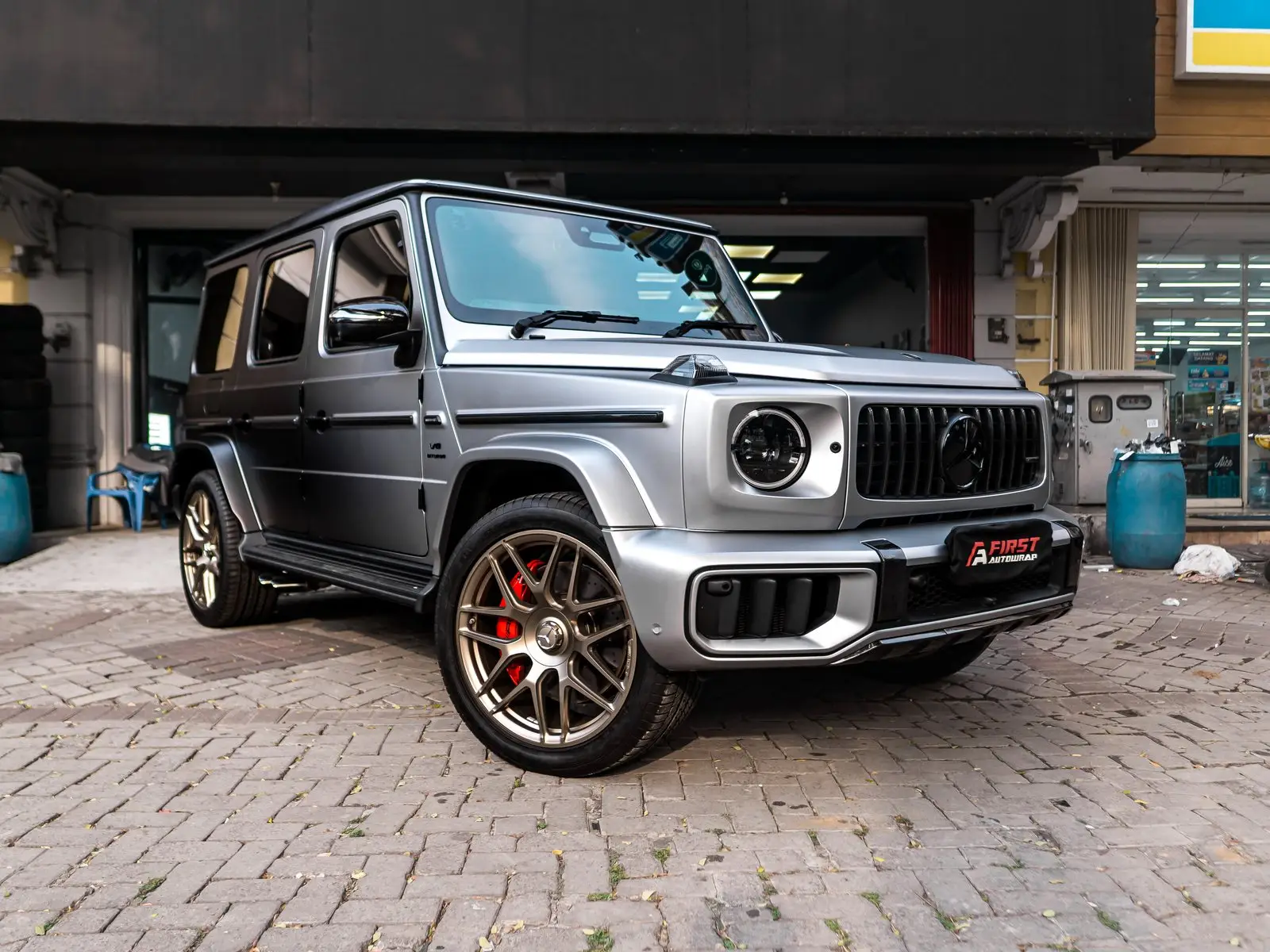
Short answer: Car wrapping means applying vinyl film over the original paint to change its color or finish, and it can be removed without damaging the factory paint underneath. At our workshop in Gading Serpong, Tangerang, you can choose gloss, satin, matte, chrome, or color shift, for the full body or selected panels. The cost depends on the car model, the area covered, and the type of film.
Key points:
- A wrap covers the paint instead of replacing it. The original paint stays protected and the car goes back to its standard color when the film comes off.
- A wide range of finishes: gloss, satin, matte, chrome, black chrome, color shift, candy, plus two tone and custom liveries.
- Our main material is INOZETEK; our portfolio also includes jobs done with other films.
- The work goes panel by panel: inspection, washing and decontamination, surface preparation, installation with tucked edges, then QC under work lights.
- There is no flat price. The car model, full or partial coverage, the finish, and the paint condition all shape the estimate.
What Car Wrapping Is, and Why the Original Paint Stays Safe
A car wrap is a sheet of adhesive vinyl film laid over the paint. The film follows the shape of each panel, and its edges are folded behind the panel (we call it tucked-in) so no seams show. What changes in your eyes is the color and texture; underneath, it is still the factory paint.
Because the film sticks to the paint rather than bonding with it like paint does, it can be removed. Taken off properly, the original paint comes back in good condition. That is the most basic difference from a respray: a wrap is reversible, a respray is permanent. If you are still weighing the two, we go deeper in our article on car wrap or repaint.
One honest note: a wrap is not your main defense against stones and abrasion. Stone-chip protection is the job of PPF (paint protection film), which we explain on our car PPF page. Wrapping and PPF can live together, but they do different things.
When a Wrap Makes Sense, and When a Respray Is Better
Compare two situations. You want a new color for a few years, you may want the original color back when you sell, and the paint is still healthy. Here a wrap is usually the logical choice. You get a new look without touching the factory paint, and the resale value of the standard color is kept.
On the other hand, if the paint is already brittle, heavily cracked, or a peeling respray, the film adhesive has no stable base to hold on to. Forcing a wrap in that condition risks the film pulling the old paint off when it is removed. Cases like this are better solved with paint repair, not a wrap.
So the decision is not about which one is "better". It is about the state of your paint and what you want for the next few years. If what you really want is protection rather than a new color, read car wrap or PPF before you decide.
Finish Options: From Gloss to Candy
This is the fun part. The finish shapes your car's character far more than the color name alone.
- Gloss: shiny like factory paint, with deep-looking color.
- Satin: halfway between gloss and matte, with a soft sheen.
- Matte: no shine, a calm and bold look.
- Chrome and black chrome: a striking mirror-metal effect. These films are typically more sensitive, so they need extra care.
- Color shift and candy: the color changes with the viewing angle and light, giving depth that regular paint cannot copy.
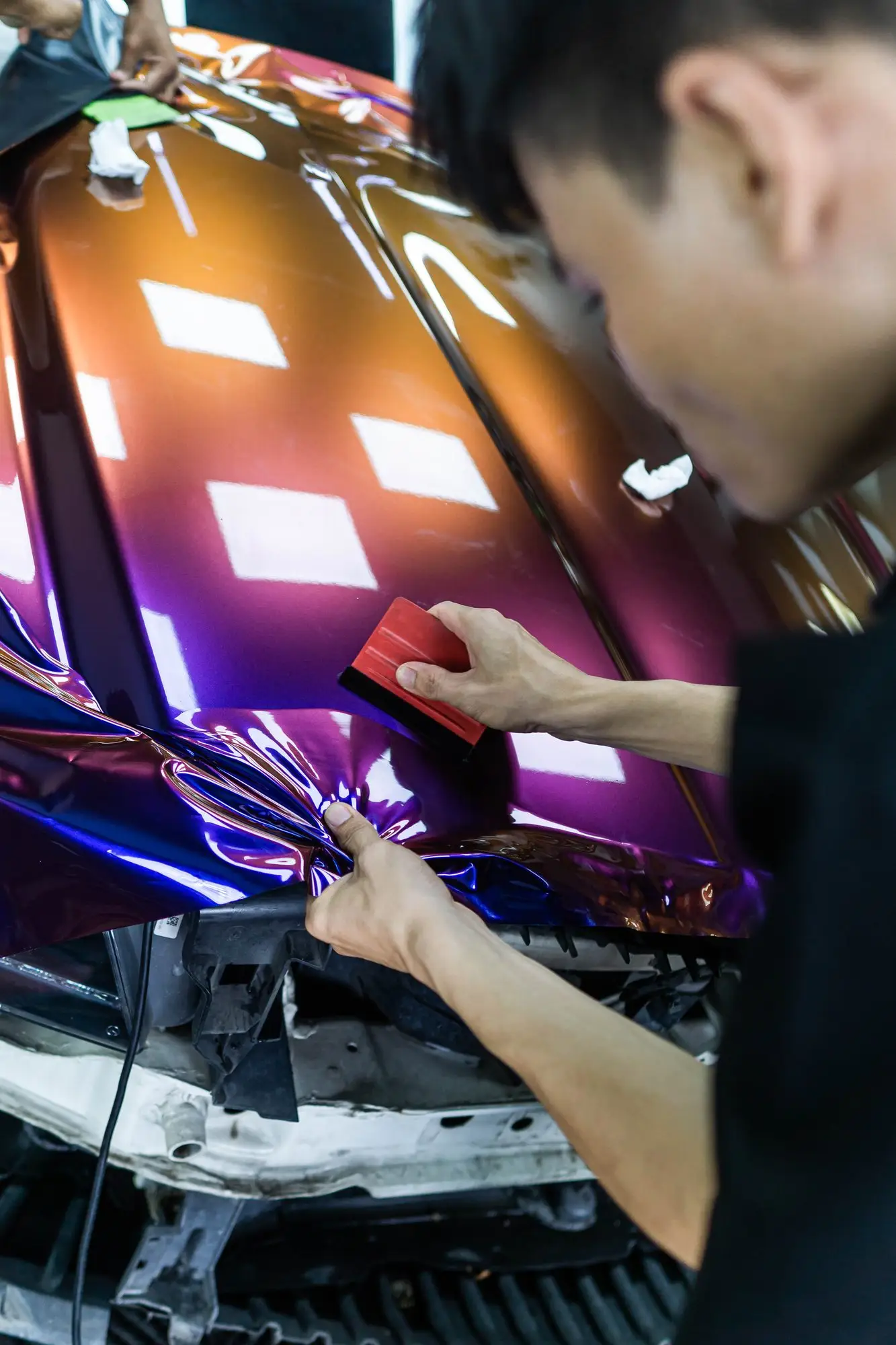
Beyond solid colors there is two tone (two colors on the body, for example a contrasting roof) and custom liveries for a racing look. These exotic finishes need more careful installation, especially on curves and complex areas.
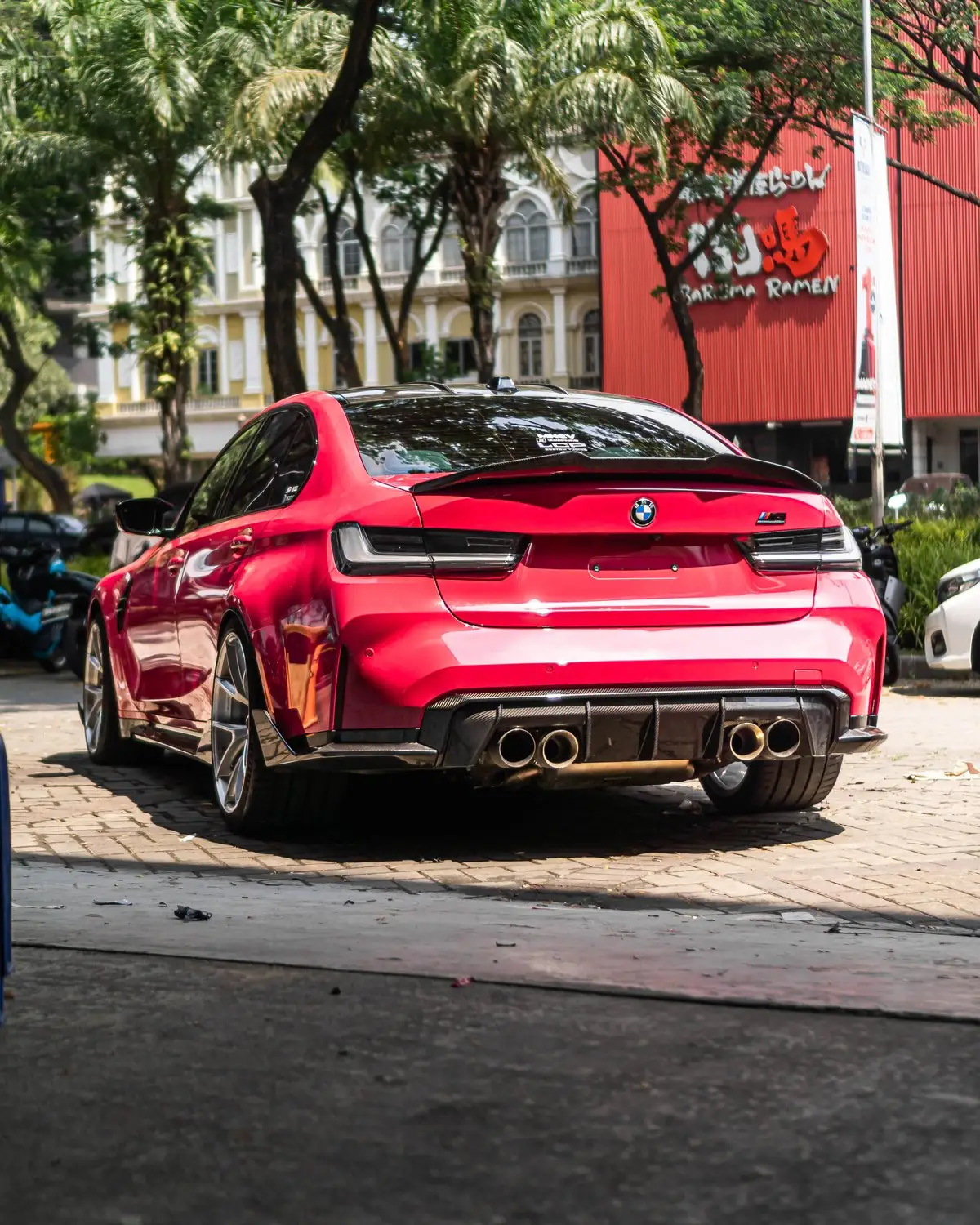
Some of the wrap jobs we have done show this range of finishes: a BMW M3 in Teckwrap Berry Red, a Nissan GT-R R35 in Axevinyl Cement Grey, a Mercedes-AMG G63 with a silver-to-black gradient, an Acura NSX in Ferrari Red, a Porsche Taycan in Magic Candy Grey Purple, a BMW M8 in San Marino Blue, and a Lamborghini Gallardo in Moonlight White. For a track-style look, we have also done a Ferrari 296 GTB and a McLaren 600LT with custom liveries.
Materials: What We Use and What Is in Our Portfolio
The main material we use and recommend is INOZETEK, for both wrapping and dynamic PPF, available in several thicknesses. You can read its official specifications on the INOZETEK website.
For other brands, it helps to separate the material we standardize on from the brands that appear in our portfolio. Our portfolio also includes jobs with films such as Teckwrap and Axevinyl, depending on the request and the availability of certain colors. Both are well-known film makers; you can browse their finish catalog on the Teckwrap website, for example. We mention these brands as market context, not as a claim that we stock all of them at all times.
On technical figures such as thickness in microns or expected film life, we prefer not to guess. Typical ranges differ between manufacturers and product lines, so the safest reference is each brand's official spec sheet.
How We Work: Panel by Panel, Never Rushed
Most of what makes a clean wrap is decided before the first piece of film goes on. Our order of work looks roughly like this:
- Paint inspection, panel by panel. We check for scratches, past repairs, and the condition of the surface. This is also where we tell you honestly if an area needs fixing first.
- Thorough wash and decontamination. Any dirt or residue left behind gets locked under the film, so this step cannot be skipped.
- Surface preparation. Making sure each panel is truly clean and dry so the adhesive grips fully.
- Installation, panel by panel. The film goes on one surface at a time, with edges folded behind the panel so no ends are left lifting.
- QC under work lights. We check edges, corners, and possible bubbles under strong lighting, not with a quick glance.
- Handover and care guide. We explain how to look after the film so the result lasts.
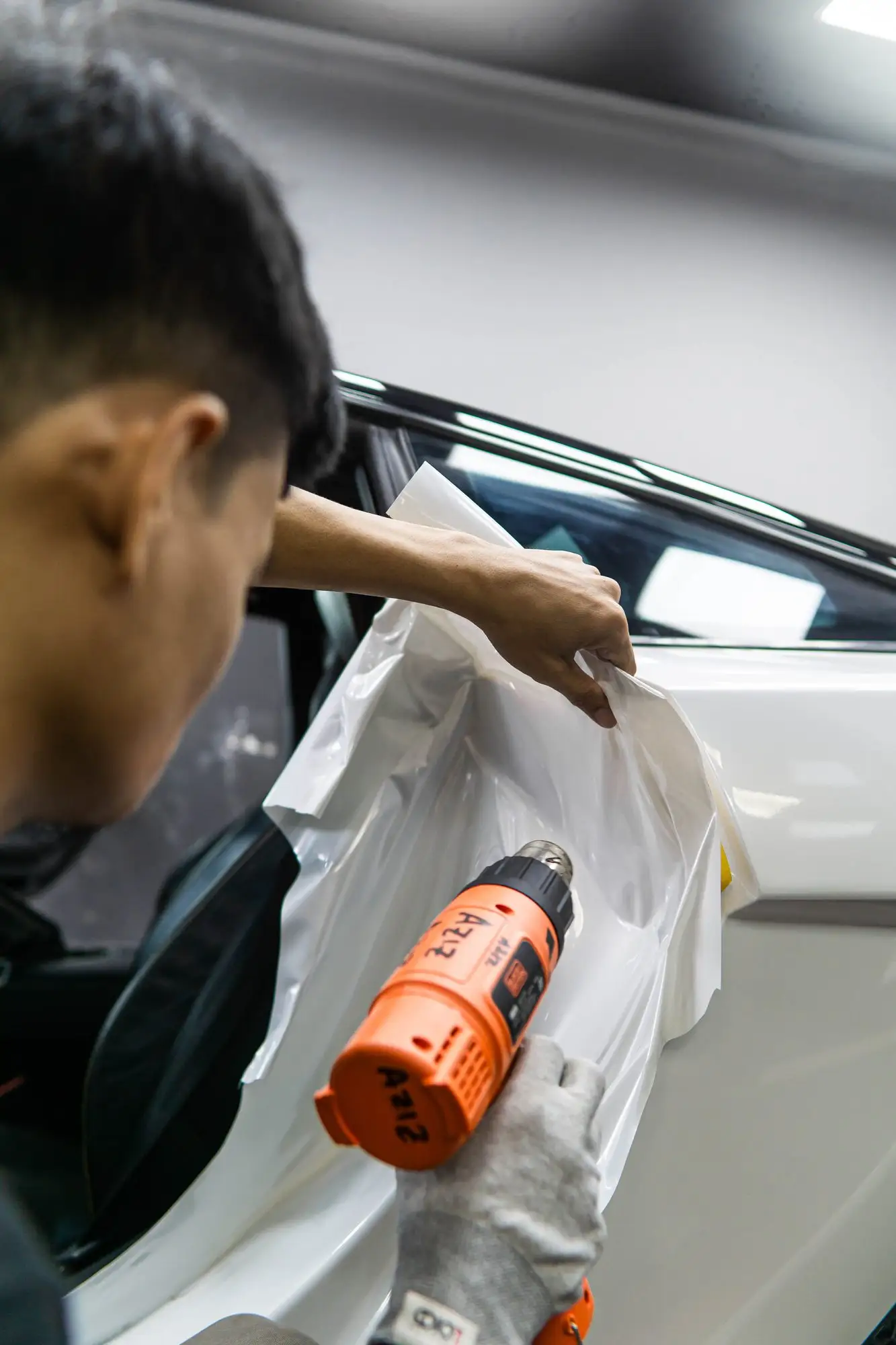
Our workshop is enclosed and kept clean, because airborne dust is the main enemy of film installation. For PPF jobs, we even keep a separate dedicated room.
Full Body or Partial: Match It to Your Goal
Not every job has to be full body. If you want to change the car's whole character, a full body wrap is the way: every panel is covered in a new color or finish. But if you only want an accent or to cover one area, a partial wrap often makes more sense.
Areas commonly done on their own include the roof (often gloss black for a two-color effect), hood, mirrors, trim, and accent panels. Two tone is basically a set of partial wraps designed as one look. This choice also affects the cost, since the area covered is clearly different.
What Determines the Cost of a Wrap
We do not set a flat price, because no two cars need exactly the same work. The estimate comes down to roughly four things:
| Factor | Effect on cost |
|---|---|
| Car model and size | Hatchbacks, sedans, SUVs, and supercars have different panel areas and levels of complexity |
| Full or partial | The larger the area, the more material and labor hours it needs |
| Film type and finish | Plain gloss differs from chrome, candy, or color shift, which are harder to install |
| Paint condition | Paint that needs repair first adds a stage of work |
The most accurate way to get a number is to send us photos and your car model. From there we can recommend a film and give an estimate that fits your car's condition, not a general guess.
Quick Care After Wrapping
Vinyl film is durable, but its life depends heavily on how it is cared for. In short: avoid harsh brushes, hand wash with pH-neutral soap, avoid long hours parked in strong sun when you can, and clean off things like bird droppings quickly. Matte and satin finishes have extra rules because they must not be polished like gloss.
From Our Workshop
A pattern we see often: owners arrive with a favorite color in mind, then realize at the workshop that the finish (gloss, satin, or candy) changes the impression far more than the color code itself. The questions that almost always come up are "will my original paint be safe?" and "can it go back to standard?". Our answer is consistent: as long as the paint is healthy, a wrap covers and protects it. What we most often advise against is wrapping over brittle paint or a poor respray, because there the risk shows up at removal, not at installation.
Car wrapping gives you the freedom to change the look without touching the factory paint, with a far wider choice of finishes than conventional paint. The keys are the paint condition, the film choice, and careful installation.
If you already have a color or finish in mind, send us photos and your car model, and we will put together a film recommendation and an estimate that fits your car.
Frequently asked questions
Does car wrapping damage the original paint?
No, as long as the paint is healthy and the film is removed properly. A wrap actually covers the paint from daily exposure. The risk only comes when film goes over paint that is already brittle or a peeling respray, because the old paint can lift with the film when it comes off.
How long does a car wrap last?
Film life varies by manufacturer, finish, and above all how the car is looked after. We do not quote a fixed number because there are too many variables. The best guide is the film maker's official specification together with your own care habits.
What is the difference between wrapping and PPF?
Wrapping changes the look (color and finish), while PPF focuses on protecting the paint from scratches and stone chips. Both are films, but they have different jobs and can work together. If protection is your priority, PPF is the better fit; if you want a new color, choose wrapping.
Can I wrap only part of the car?
Yes. The roof, hood, mirrors, and accent panels are often done on their own, including for a two-tone look. A partial wrap is a common choice when you want an accent or a two-color effect without covering the whole body, and the cost follows the area covered.
Can I ask for an unusual color or finish?
Yes. Besides solid colors, we do chrome, black chrome, color shift, candy, two tone, and custom liveries. These exotic finishes need more careful installation, so it is best to discuss them early along with your car model so we can recommend the right film.