
Short answer: Color PPF is colored paint protection film: a TPU film layer that changes your car's color and protects the original paint in one layer. Unlike clear PPF, which does not change the color, color PPF gives the car a new color without a respray. The film can be removed, and the factory paint underneath stays intact. At our workshop in Gading Serpong, it suits owners who want a fresh color and protection at the same time.
Key points:
- Color PPF combines two jobs, a color change and paint protection, in one removable TPU film.
- Compared with vinyl wrapping, the color range is narrower, but the protection matches clear PPF.
- Available in gloss or matte, for the full body or selected parts (roof, hood, specific panels).
- Our main material is INOZETEK, fitted panel by panel in our dedicated PPF room.
- The cost depends on the car model, coverage, film color and finish, and paint condition, not a fixed figure.
What Color PPF Is and How It Differs from Regular Film
Let's start with the definition. Color PPF is paint protection film that is colored right off the roll. It is made of TPU (thermoplastic polyurethane), the same elastic material as clear PPF, but with the pigment built into the film layer. Once it is fitted, your car shows a new color, and at the same time the original paint sits under a protective layer.
That double function is what makes color PPF appealing. You do not have to choose between "change the color" and "protect the paint". You get both in one layer. Because it is TPU, the film is thicker and more pliable than ordinary vinyl, so it can absorb fine scratches, small stones flicked up on the road, and stains that land on the surface.
A common question: is the original paint safe? Yes. The film goes over the paint, it does not replace it. When the film is removed properly, the factory paint underneath is still in its original condition, because it has been shielded from UV and direct contact all along. This is why many premium car owners choose film over a respray: the car's originality is better preserved.
You will often hear the term "self-healing" with PPF. In general, the top layer of TPU can recover from very fine scratches when warmed. We do not promise exact figures; what is clear is that TPU is far more abrasion-resistant than vinyl.
Color PPF vs Clear PPF vs Vinyl Wrapping
So you are not left guessing, we usually explain these three options side by side. They are often mixed up, even though they have different goals.
| Aspect | Color PPF | Clear PPF | Vinyl wrapping |
|---|---|---|---|
| Changes the color | Yes | No | Yes |
| Protects the paint | Yes, on par with PPF | Yes | Limited |
| Color and finish range | Narrower | Transparent | Widest |
| Material | TPU | TPU | Vinyl (PVC) |
| Removable | Yes | Yes | Yes |
Clear PPF is purely about protection. Your car's color does not change at all; the transparent film just guards the paint against stones and scratches. If you are happy with your car's color and only want to cover it, clear car PPF is the answer.
Vinyl wrapping, on the other hand, wins easily on variety. It has the widest range of colors and finishes, from gloss, satin, and matte to chrome and color flip. But vinyl is a thinner material focused on looks, not physical protection. If what you want is the widest possible color expression, our car wrapping service is the better fit.
Color PPF sits in the middle. Its protection matches clear PPF because both are TPU, but it comes with color. The trade-off is a narrower color range than vinyl, because producing pigmented TPU film is much more complex. If you are still torn between the two routes, we go deeper in our article on car wrap or PPF.
Who Color PPF Suits
Picture two car owners. The first wants the car to look different from the factory color, but is not willing to let the paint pick up swirl marks from washing and stone chips on the toll road. The second just wants a new color and does not think much about protection. For the first, color PPF almost always makes sense. For the second, vinyl wrapping is usually more economical.
So color PPF suits you if you:
- Want a new color that stands out, while keeping the original paint protected from fine scratches, stones, and stains.
- Care about keeping the resale value and originality of the factory paint, since the film can be removed.
- Want colored film on the areas that take small hits most often, such as the hood, bumper, and roof.
If the color you have in mind is very specific and only exists in a vinyl catalog, we will tell you up front. Not every color is available as color PPF, and we would rather you know that before the car comes in.
Finishes, Coverage, and the Material We Use
Color PPF comes in two main finishes: gloss and matte. Gloss gives a wet reflection and rich color, ideal if you like a shiny look. Matte softens reflections for a calmer impression and is often chosen for dark colors such as black. It is a matter of taste, and both protect the paint underneath equally.
For coverage, you can choose full body or partial. Full body means every body panel is covered, so the color changes evenly and the protection is complete. Partial jobs usually target the panels most at risk or the ones you want to accent, such as the roof, hood, or mirrors. A two-tone color combination is also possible, depending on the design you want.
Our main material is INOZETEK. The maker produces TPU film with color change technology that combines a new color with protection, as explained on the official INOZETEK website.
How We Install It at Our Workshop
Here is our order of work, step by step, so you know what happens while the car is with us.
- Paint inspection, panel by panel. We check your paint for scratches, past repairs, and how even the surface is. This tells us what preparation is needed.
- Thorough wash and decontamination. The car is washed clean, then the surface is decontaminated to lift bonded dirt the eye cannot see.
- Surface preparation. Each area is cleaned until it is completely free of dust and residue, because TPU film has to bond to a perfectly clean surface.
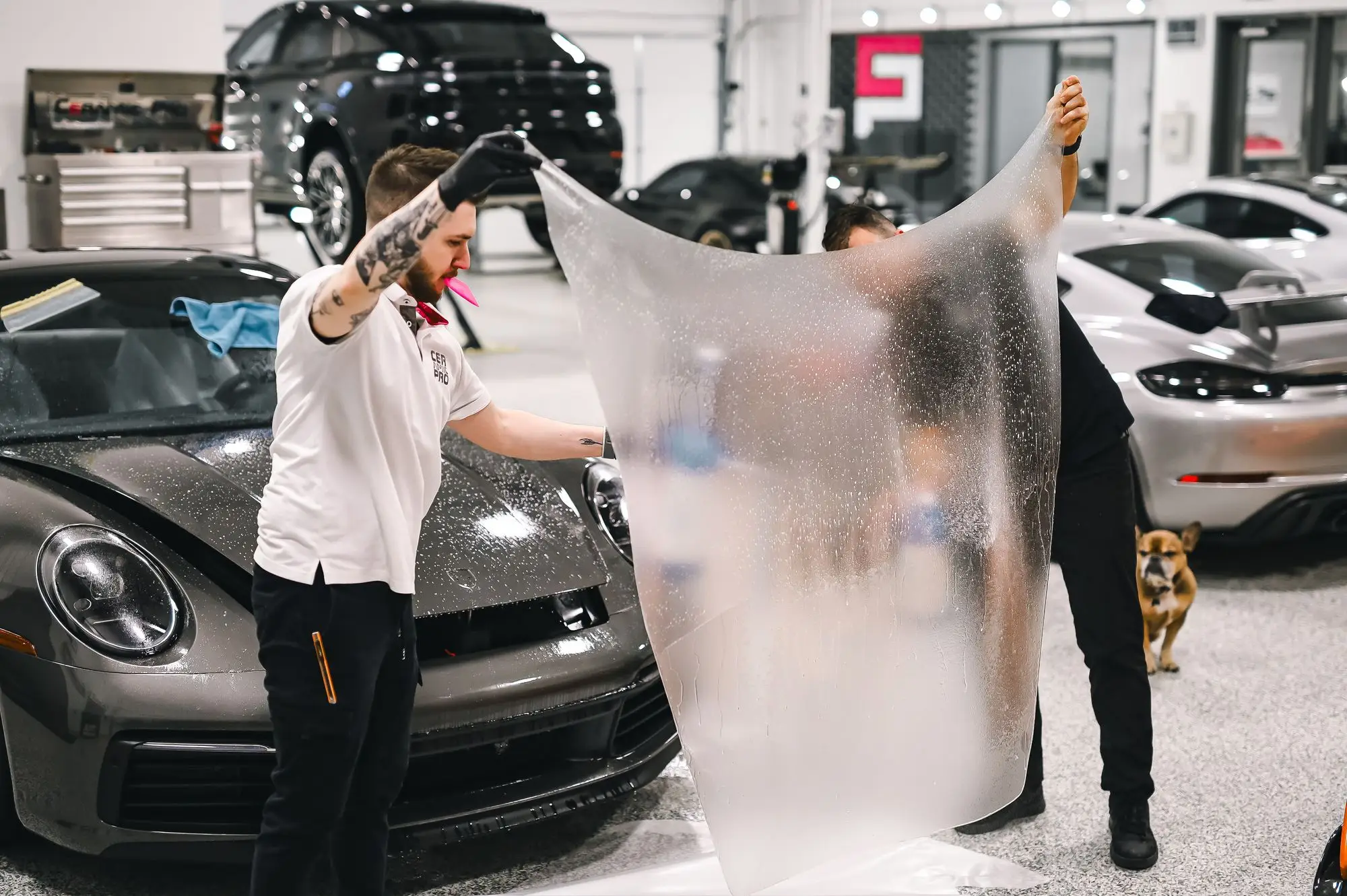
- Installation, panel by panel. The film goes on one panel at a time in our dedicated PPF room, with the edges folded behind the panel (tucked-in) so the seams are neat and less likely to lift.
- QC under work lights. We check every edge, corner, and surface under lights to make sure no bubbles or fibers are trapped.
- Handover and care guide. We explain how to look after the film so the color lasts, before the keys go back to you.
The dedicated PPF room matters because dust is the main enemy of film installation. In a clean, enclosed room, the risk of particles getting trapped under the film is much lower, and the finish looks cleaner up close.
What Determines the Cost
The cost question always comes up, and our answer is always the same: it depends. We are not dodging it; color PPF simply has no single price. A few things decide it:
- Car model and size. A bigger car has more panel area, so it needs more film and more labor hours.
- Full or partial. Covering the whole body is different from covering only the roof and hood.
- Film color and finish. Some color PPF colors and finishes cost more because of availability and production.
- Paint condition. Paint that needs more preparation adds work before the film goes on.
That is why we do not list prices on this page. The most accurate way is to send us photos and your car model, and we will work out an estimate based on your car's real condition.
Quick Care for Color PPF
Looking after color PPF is not complicated, but there are rules. Wash with pH-neutral shampoo, avoid harsh brushes, and dry with a clean microfiber towel. For matte finishes, do not use gloss-enhancing products because they can change the surface character. Bird droppings and tree sap are best cleaned off quickly so they do not set.
Consistent care keeps the film's color fresh for longer.
From Our Workshop
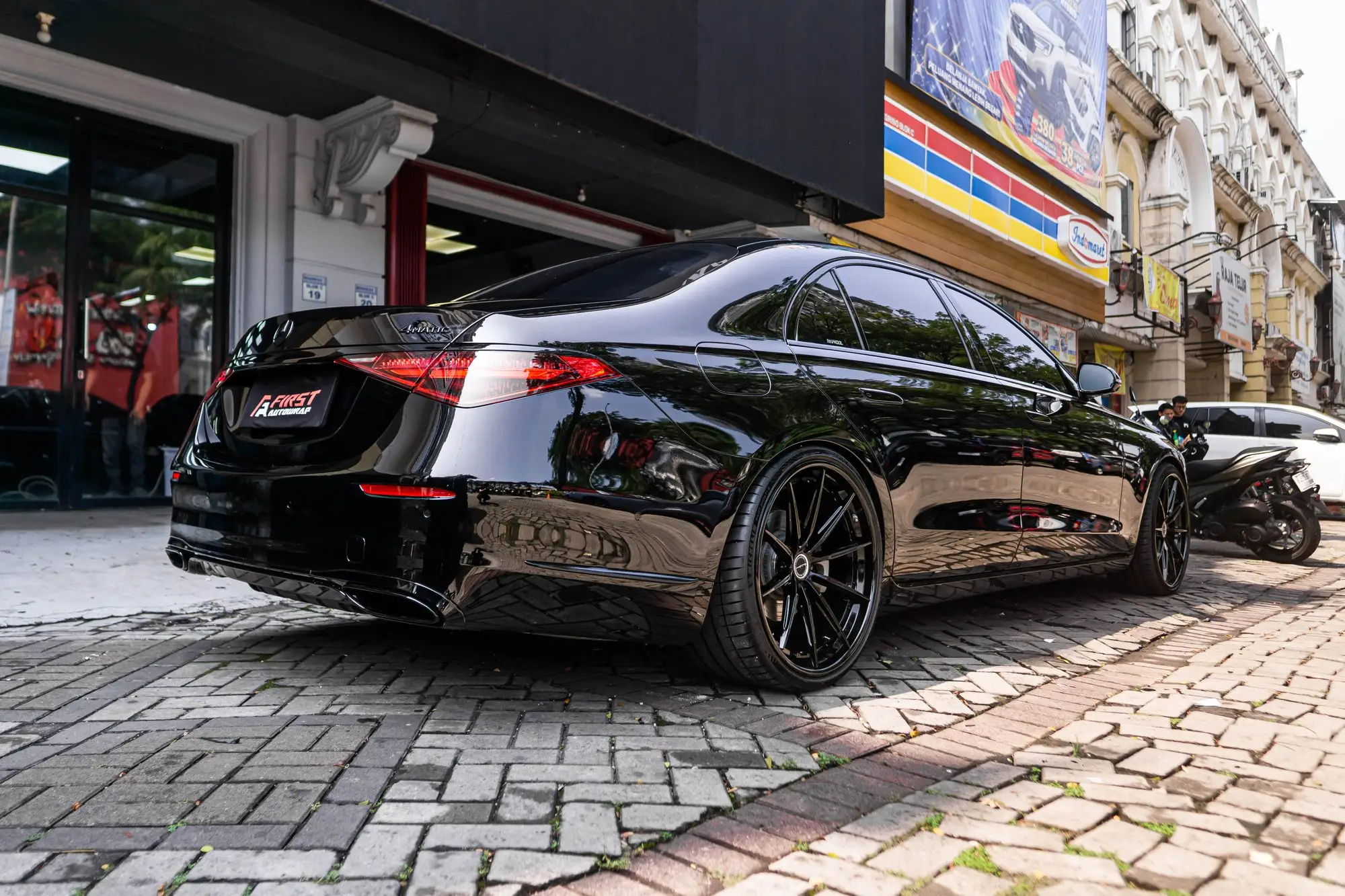
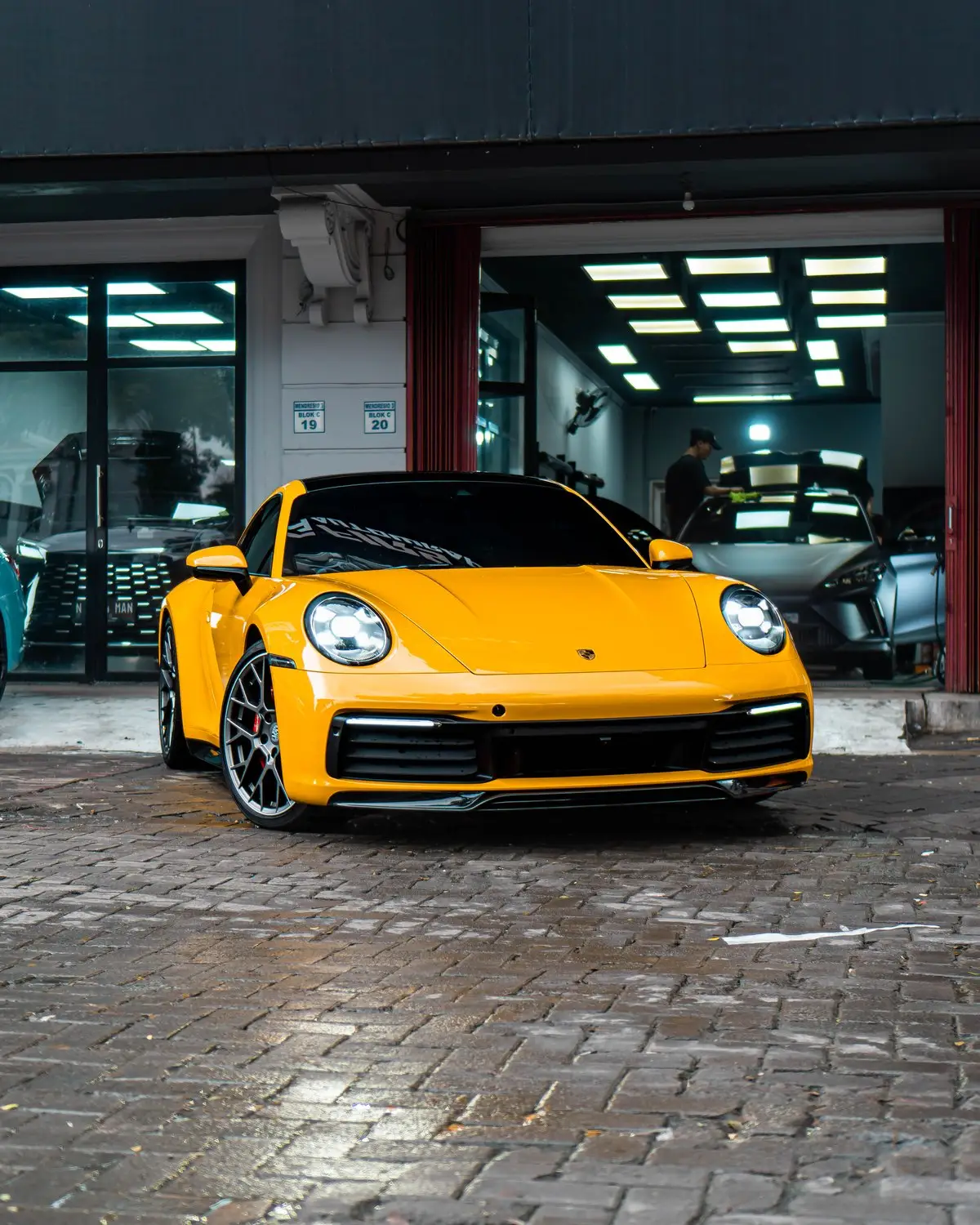
Sometimes the color an owner wants only exists in a vinyl catalog. At that point we are honest: not every color is available as color PPF, and we show the options that do exist. Two of our color PPF jobs are a Porsche 911 Carrera S in McLaren Orange and a Mercedes-Benz S450 in a Piano Black finish. The choice is full body if you want the color to change completely, or partial (for example the hood and roof) if the goal is protection plus an accent.
If you want your car in a new color without sacrificing the original paint, color PPF is a sensible middle path. Fresh color on top, protected factory paint underneath, and all of it reversible whenever you want.
We serve car owners in Gading Serpong, Tangerang, and the surrounding area. Tell us about your car and the color you have in mind, and we will help you check whether color PPF is the right choice for you.
Frequently asked questions
Is color PPF the same as a color wrap?
Not exactly. Both change the color and can be removed, but color PPF uses thicker TPU and protects the paint like PPF does, while vinyl wrap is thinner with a much wider color range. Color PPF combines color and protection in one layer.
Will the original paint be damaged when color PPF is removed?
If it is installed and removed properly, the original paint stays intact. While it is on, the film actually shields the paint from UV and abrasion, so the factory paint underneath is usually in good condition when the film comes off.
Can color PPF go on only part of the car?
Yes. Many owners cover only the roof, hood, or certain panels, either to protect the areas most at risk or for a two-color accent. Full body is the choice when you want the color to change evenly across the whole car.
What colors are available in color PPF?
The color range is narrower than vinyl, because producing pigmented TPU film is more complex. It comes in gloss and matte finishes. We suggest asking about the color you want first, since availability depends on the film catalog.
How much does color PPF cost for my car?
The cost depends on the car model and size, full or partial coverage, the film color and finish, and the paint condition. There is no single price for every car. Send us photos and your car model so we can work out a fitting estimate.