Short answer: The part of car wrap care and PPF care that matters most is holding off on the first wash for about two days after handover, then washing by hand on a regular basis with pH-neutral soap and a soft microfiber cloth. Avoid high-pressure spray on the film edges, harsh polishing, and solvents. Treat the car this way and both a wrap finish and PPF will last a lot longer.
Key points:
- Don't wash the car in the first 48 hours. The film adhesive needs time to cure, and leftover installation water has to evaporate first.
- Hand washing is safer than an automatic car wash with brushes. pH-neutral soap and clean microfiber is the safest combination.
- The film's main enemies: a pressure washer held too close to the edges, solvents (thinner, gasoline, strong degreaser), and abrasive polishing.
- Matte and satin finishes have their own rules: no polishing and no gloss wax.
- Harsh stains like bird droppings, tree sap, and bugs need to come off quickly. Don't let them dry.
The first two days decide how long the film lasts
The moment the car leaves the workshop, the biggest temptation is to wash it right away so it looks spotless. We'd ask you to hold off. The glue (adhesive) on the back of the film needs time to fully bond and set against the paint, and during installation there is always some soapy water trapped under the film. That leftover water is normal. Sometimes it looks like a thin haze or small bubbles, and it usually evaporates on its own within a few days.
The common rule of thumb in the industry is to wait about 48 hours before the first wash. XPEL, one of the global PPF manufacturers, says the same thing on their official care page: wait 48 hours before washing a vehicle with new PPF. Avery Dennison also lists a similar waiting period in their wrap care bulletin. So this isn't a rule we made up. It's standard practice across brands.
During those two days, if the car gets dirty from rain or dust, just leave it. If there's a stain that really has to come off, wipe it gently with a microfiber cloth dampened with clean water, and don't rub the film edges. Don't park it under the blazing sun all day yet, and stay away from deep puddles or a quick express pressure wash in the first two days.
One thing we often explain at handover: if you see water lines or small hazy spots under the film on day one, that is not an installation defect. Give it time. If those spots are still there after one to two weeks, that's the signal to contact the workshop. Until then, they are simply part of the film settling in.
Wash by hand first, automatic machines later
The question that comes up almost every time: "Can I take a wrapped car to a regular car wash?" The honest answer is yes, as long as you know the difference between the types of wash.
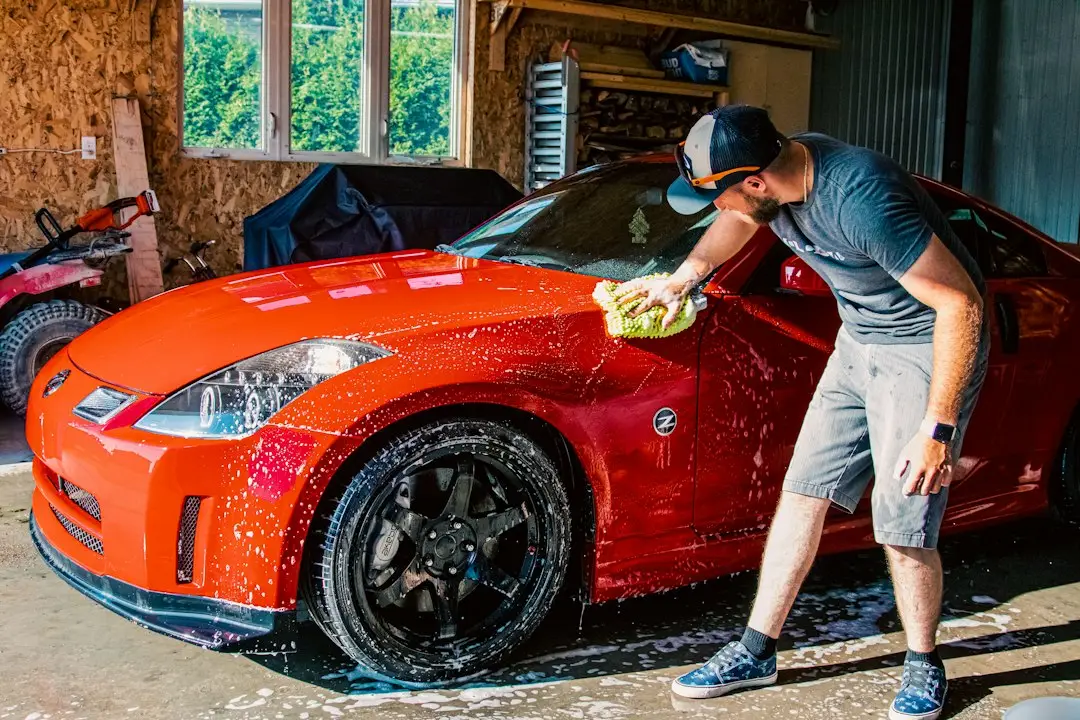
Hand washing is the safest option for both wraps and PPF. You control the pressure, the direction you wipe, and which parts get touched. The two-bucket method helps a lot: one bucket holds the soap solution, the other holds clean water for rinsing the wash mitt before you dip it back in. That way sand and grit don't get dragged across the film, which is exactly what causes fine scratches.
Automatic car washes come in two types. The ones with spinning brushes (friction wash) are best avoided, especially for matte finishes and film edges that are tucked in (folded around behind the panel). Stiff brushes can drag on the edge of the film and leave circular scratches. The touchless type (no contact, only water spray and cleaning liquid) is gentler, but the cleaning liquid in automatic machines is often strongly alkaline so it can cut grease quickly. Used now and then, that's tolerable. Used regularly, it can make the finish go dull faster.
Washing the car at home with a bucket and a low-pressure hose is generally better than lining up at a brush-type automatic wash. If you still use a car wash service, leave a note for the operator: no brushes, medium water pressure, and don't point the nozzle straight at the panel seams.
Soap, cloths, and tools that are safe
The shopping list for wrap care isn't long, but picking the right items matters. Here is what we recommend and why.
pH-neutral soap (a proper car shampoo). Avoid dish soap and household detergent. Both do cut grease, but they also wear down the protective layer and make the finish fade quickly. Avery Dennison, in their wrap care blog, recommends a pH-neutral car wash and washing by hand. The principle is simple: the gentler the chemistry, the safer it is for the film.
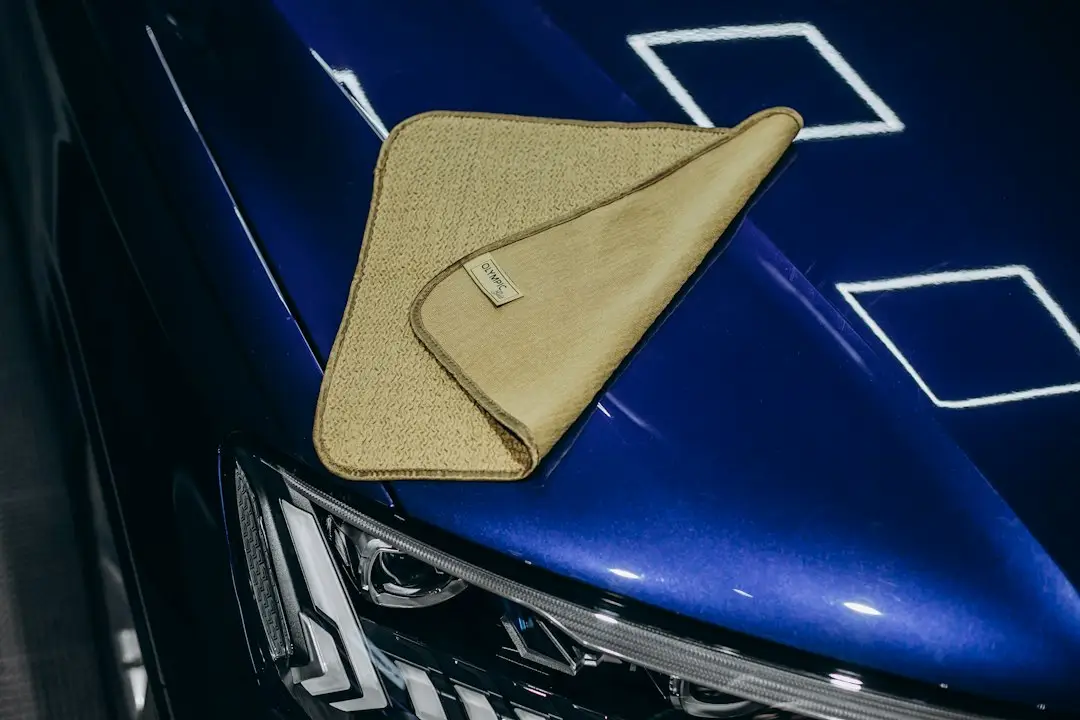
Microfiber, not a hard chamois or a rough sponge. Use a microfiber wool wash mitt or a soft mitt when you're soaping, and a thick, plush microfiber towel for drying. Rough fibers, a synthetic chamois that has gone stiff (what many people here call a kanebo), or a cloth that has been dropped on the floor are the most common causes of fine scratches we see. Keep your car cloths separate from your garage rags.
Clean, low-pressure water. A regular garden hose is enough for rinsing. If you use a pressure washer, keep your distance and angle in check (we cover this in more detail below).
A film-safe detailing spray or quick detailer. Handy for lifting light dust between washes without having to hose down the whole car. Make sure the label says it's free of harsh solvents.
The wash steps we recommend, in order:
- Rinse the whole body with water to loosen sand and coarse dust first. This lowers the risk of scratching when you start rubbing.
- Make a foam with pH-neutral soap and wash from the roof down, one panel at a time in one direction, not in circles.
- Dip and rinse the mitt in the clean water bucket every time you move to a new panel.
- Rinse off all the soap before it dries.
- Dry with a microfiber towel by patting and pressing, not by dragging it, so you don't lift the film edges.
Remove harsh stains as soon as you can. Bird droppings, tree sap, and dead bugs are acidic and can etch into the surface if they're left to dry in the sun. Soak them first for a few minutes with warm water or detailer, then lift them off gently. Don't scrape at them with a fingernail or a dry cloth.
What to avoid, and the mistakes we see most often
It's easier to keep film in good shape by avoiding a few things than to fix it after it's damaged. This is the list of what causes problems most often.
A pressure washer held too close to the film edge. This is the number one reason film lifts. High-pressure spray aimed directly and closely at an edge, a panel seam, or a tucked-in end can get under the film and pry it up. XPEL explicitly warns against aiming high-pressure water at the film edges. The safe rule we use: keep the nozzle at least about 30 cm (roughly 12 inches) away, use medium pressure, and spray at an angle (about 45 degrees), not straight on at the seam line.
Solvents and harsh liquids. Thinner, gasoline, acetone, engine cleaner (strong degreaser), ammonia-based glass cleaner, and solvent-based tire shine are poison for a wrap. They can soften the adhesive, make the color run, or leave permanent stains. If you get gasoline on your hands while filling up and then touch the body, wipe it off right away with soapy water.
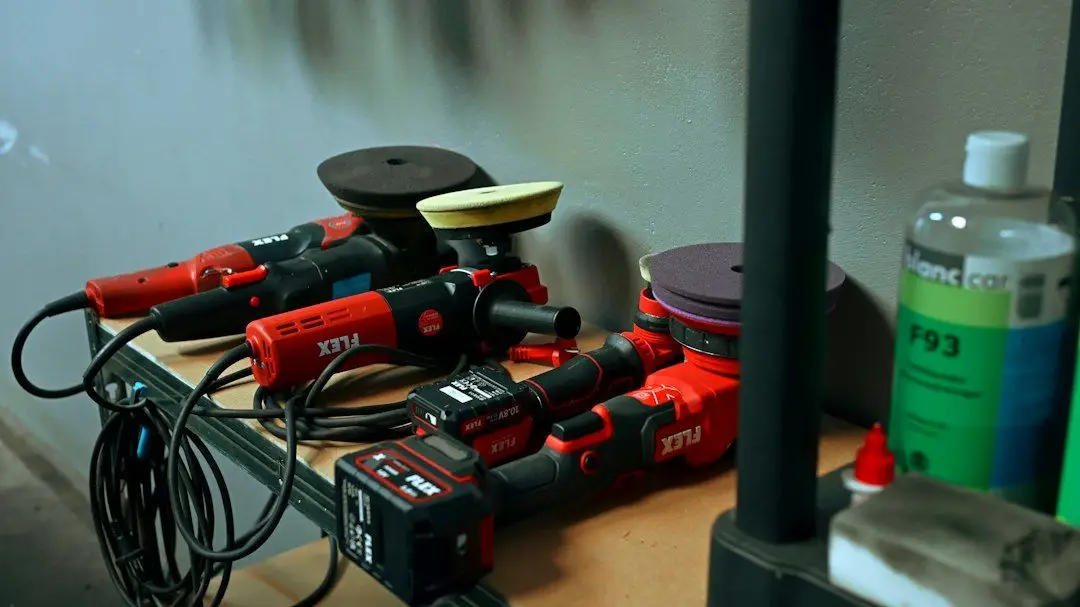
Abrasive polishing, and gloss wax on matte finishes. A polishing machine with a coarse compound is designed for paint, not film. On a wrap, harsh polishing can thin the surface and make it shiny in an uneven way. On a matte or satin finish, glossy wax and sealant actually ruin the look, leaving patchy shiny spots.
Letting acidic stains dry. We mentioned this above, but it's worth repeating because it happens a lot: the car sits under a tree for weeks, bird droppings pile up, and only then does it get cleaned. By that point the marks have sometimes already stained the film.
Stickers and tape on top of the film. Sticking a monthly parking sticker, a toll sticker, or duct tape on a wrap and then peeling it off can pull the film up with it or leave adhesive residue that's hard to clean without solvents.
Another common mistake we see is treating a small problem in an aggressive way. A small bubble shows up, and it gets poked with a needle right away. An edge lifts a little, and the owner glues it down themselves with all-purpose glue. Both usually make things worse. For edges and bubbles, it's better to come back to the workshop.
Matte and satin need different care from gloss
Basic care is the same for every finish: delay the first wash, wash by hand, use pH-neutral soap, use a soft cloth. The difference comes at the "making it look better" stage.
A gloss finish is fairly forgiving. You can add a film-specific sealant for extra shine and easier cleaning, as long as the product is actually formulated for vinyl or PPF. Very fine scratches on self-healing PPF can even recover on their own with heat, for example from sunlight or a rinse with warm water, because the top layer is designed to return to its original shape.
Matte and satin finishes take more discipline. The rules: no wax, no glossy sealant, no polishing. All of these can leave a matte surface patchy and shiny in certain spots, and the effect is hard to reverse. If you need extra protection, use products that are actually labeled "matte safe". Fingerprints or grease on a matte surface are safest to remove with pH-neutral soapy water and a clean microfiber cloth, not with a glossy detailer.
These rules don't apply to window tint or interior parts, since those aren't body wrap. We've kept this guide focused on painted surfaces that are wrapped or covered with PPF. If you're still weighing these two kinds of protection, our piece on how PPF compares with ceramic coating can help you set expectations for the upkeep each one needs.
When to come back to the workshop
You can handle most of the care yourself at home. But some situations are better handled by experienced hands, not by trial and error.
Come back to the workshop if you notice any of these: the film edge starting to lift or curl at a panel corner; bubbles that don't go away after more than one to two weeks; film that is torn or has taken a hit, so the paint underneath is at risk of being exposed; stains that won't come off with soapy water; or color changes in certain areas. For PPF, if you're unsure whether something is still covered by the warranty, ask first before you tinker with it yourself, because a wrong home repair can sometimes void the claim.
Periodic maintenance is also worth considering, especially for a car that's driven daily and parked outside. Checking the edges, a thorough clean, and inspecting the panel seams are easier with work lights and the right tools. How long film lasts depends heavily on how it's treated day to day, and we go deeper into those factors in our article on how long a car wrap lasts.
From our workshop
The pattern we see most often: cars come in with fine circular scratches on the panels that are easy to reach by hand, usually from a dry cloth or a stiff chamois, not from the film wearing out on its own. The question that comes up almost every time at handover is "Can I wash it tomorrow?" and our answer stays the same: give it a break first. For an edge that has lifted slightly, what we usually do is reheat it and press it back down rather than patch it with glue, because the result is neater and leaves no residue. We also prefer to talk owners out of polishing a matte finish themselves, because patchy shiny marks are much harder to fix than a bit of dust.
Frequently asked questions
Can a wrapped car be pressure washed?
Yes, with conditions. Keep the nozzle away from the film edges, use medium pressure, and spray at an angle, not straight on at the panel seams. Steam or high-pressure water hitting an edge directly can lift the film. For everyday washing, a hand wash with a bucket is still safer.
How long should I wait before washing my car after PPF or a wrap is installed?
The general industry rule of thumb is about 48 hours. This gives the adhesive time to bond fully and lets leftover installation water evaporate. During that time, if the car gets dirty, a gentle wipe with clean water is enough. No soap needed yet.
Can a wrapped car be polished to make it shine?
For a gloss finish, light polishing with a film-specific product is still possible, but avoid coarse compounds and high-pressure polishing machines. For matte and satin finishes, don't polish or apply glossy wax at all, because it will leave the surface patchy. If in doubt, ask us first.
What soap is safe for washing a wrapped car?
Use a pH-neutral car shampoo that's actually made for cars. Avoid dish soap, detergent, and strong degreasers, because they can wear down the layer and make the finish dull. Pair it with a clean microfiber cloth, not a hard chamois or a rough sponge.
If there's a bubble or a lifted edge, can I fix it myself?
Better not. Poking a bubble or gluing an edge yourself often makes things worse and can leave a permanent mark. Small bubbles left over from installation usually disappear on their own within one to two weeks. If they stay, or an edge has clearly lifted, bring the car back to the workshop. Caring for a wrap and PPF really comes down to simple habits kept up consistently: delay the first wash, use the right soap and cloths, keep solvents away, and treat a matte finish differently from gloss. Film that's cared for like this will keep its color and its protection much longer than film that's left to fend for itself. If you're unsure about the condition of the film on your car, whether it's an edge starting to lift, a stubborn stain, or you just want to make sure you're washing it the right way, it's better to ask before trying anything yourself. Our workshop in Gading Serpong, Tangerang, is open for inspections and care consultations, for both wraps and our paint protection film service.